Featured Projects
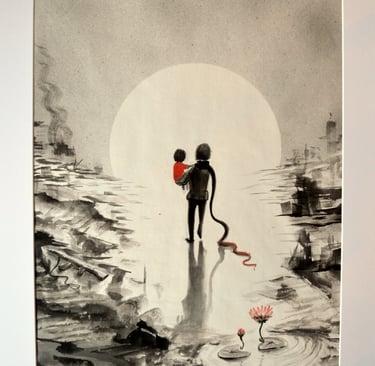
The Cycle
Materials: Sumi Ink on Rice Paper
Originally Exhibited on November 22, 2025 at the Evening for Peace Gala Dinner held on the occasion of the 13° WORLD FORUM PER LA PACE at Hotel de la Paix, Lugano
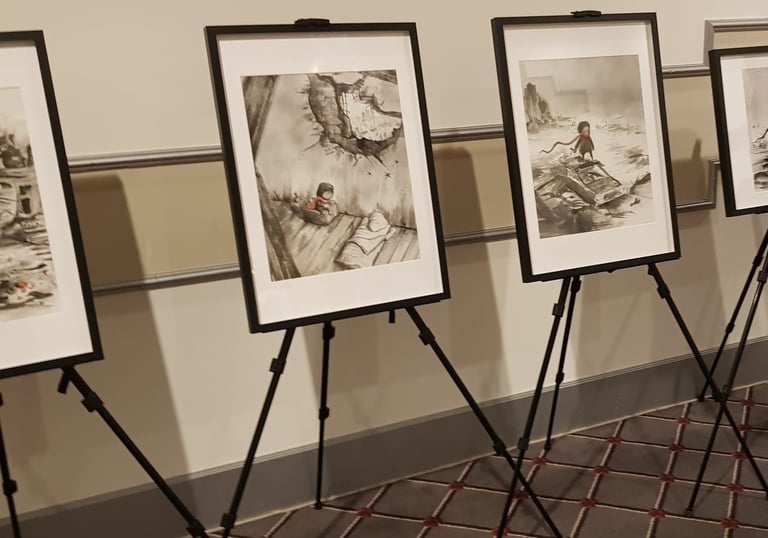
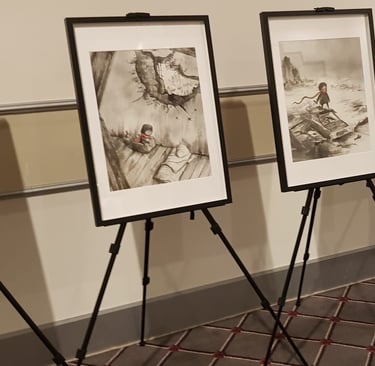
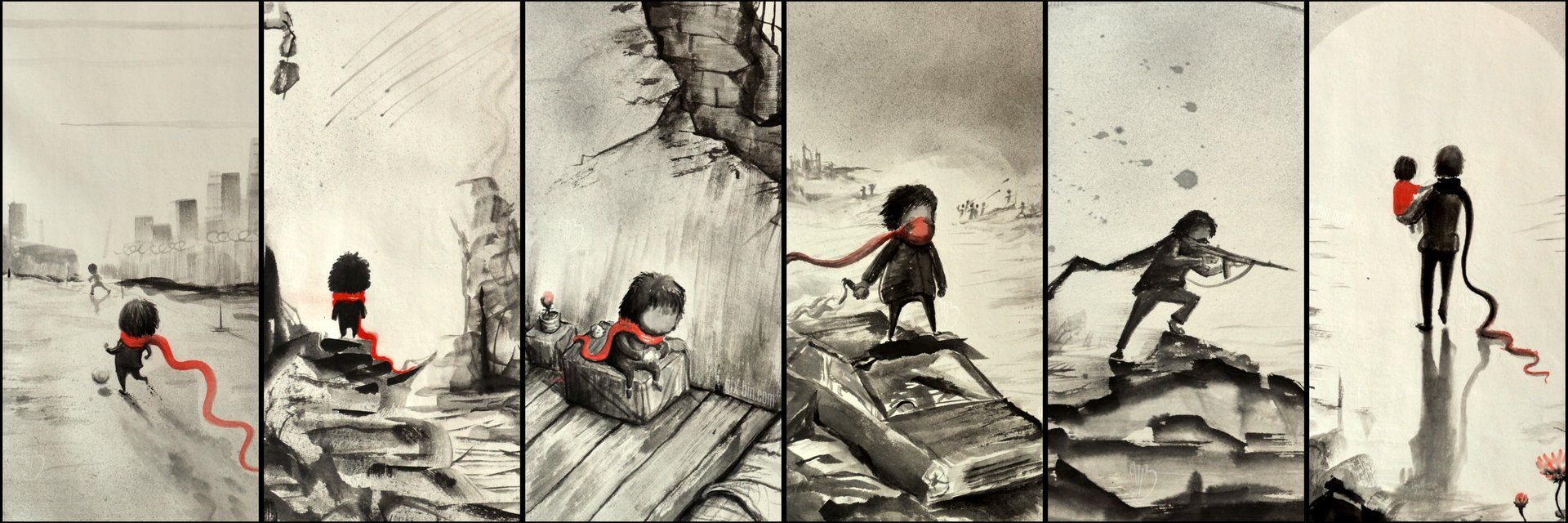
In a series of six paintings "The Cycle" depicts a tragedy repeated: the story of a child whose world is fractured by loss. In the echoing void left by their home, the seeds of violence take root. We witness how pain, left unhealed, can twist a victim into a perpetrator, passing the torch of trauma to a new, unsuspecting generation. In the sixth painting, by choosing to reach out instead of strike down, it is offering a choice for a future where humanity can take root and flourish.
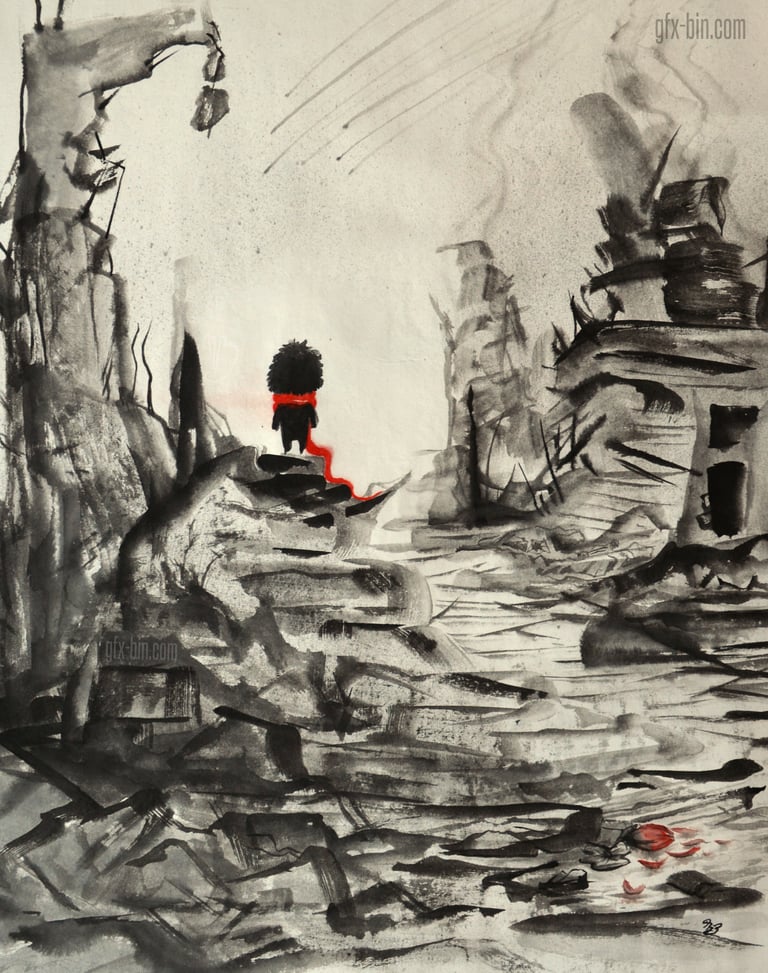
2 Loss
The universe contracts to a pile of stone and splintered memory. The child confronts the new, brutal architecture of their world, not built with hands of love, but shattered by hands of hate.
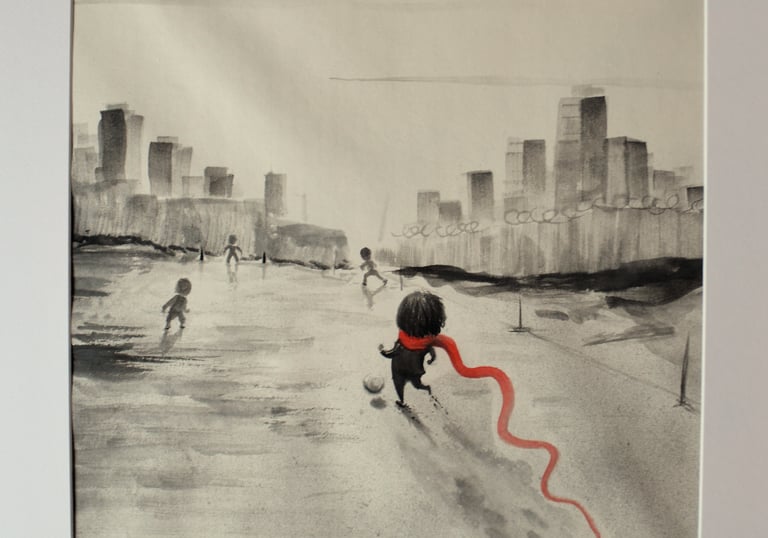
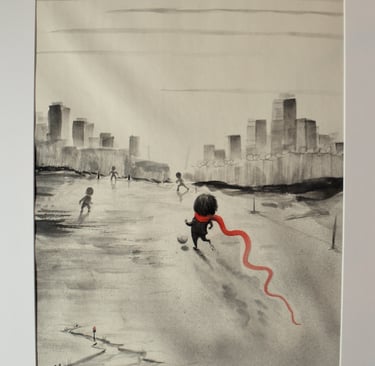
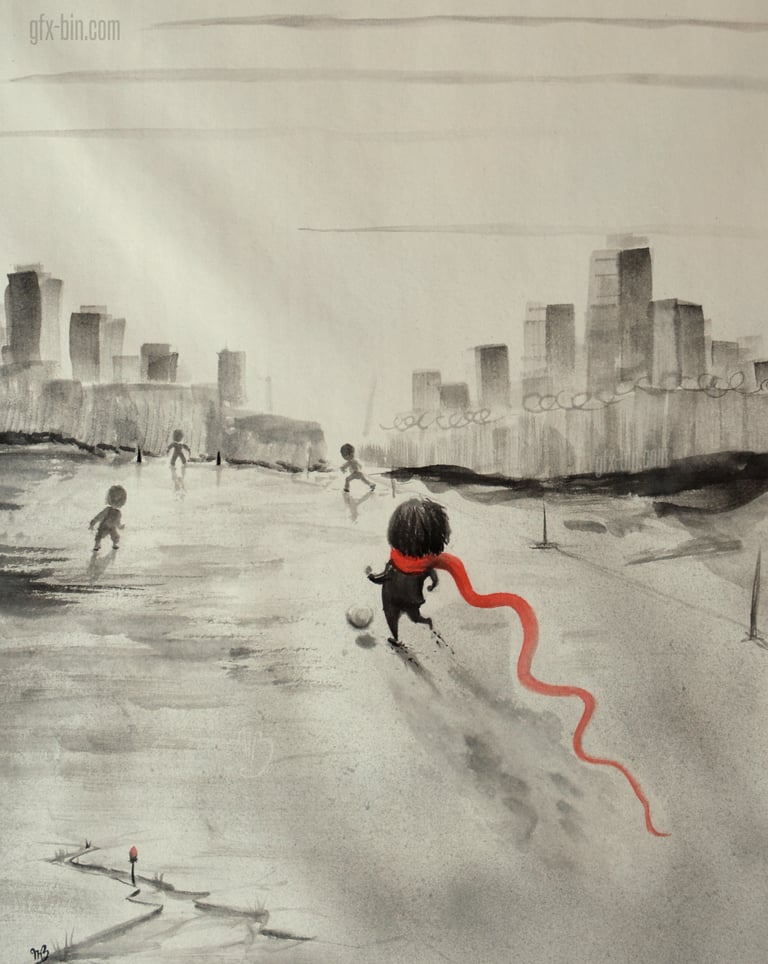
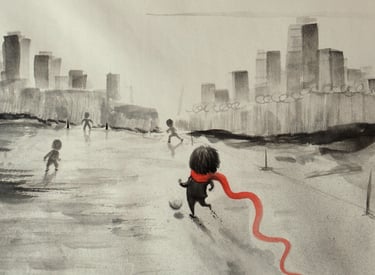
1 Play
A child is caught in a moment of pure play, kicking a soccer ball with friends. The bright red scarf is a flash of unspoiled innocence, a brief sanctuary before everything shatters.
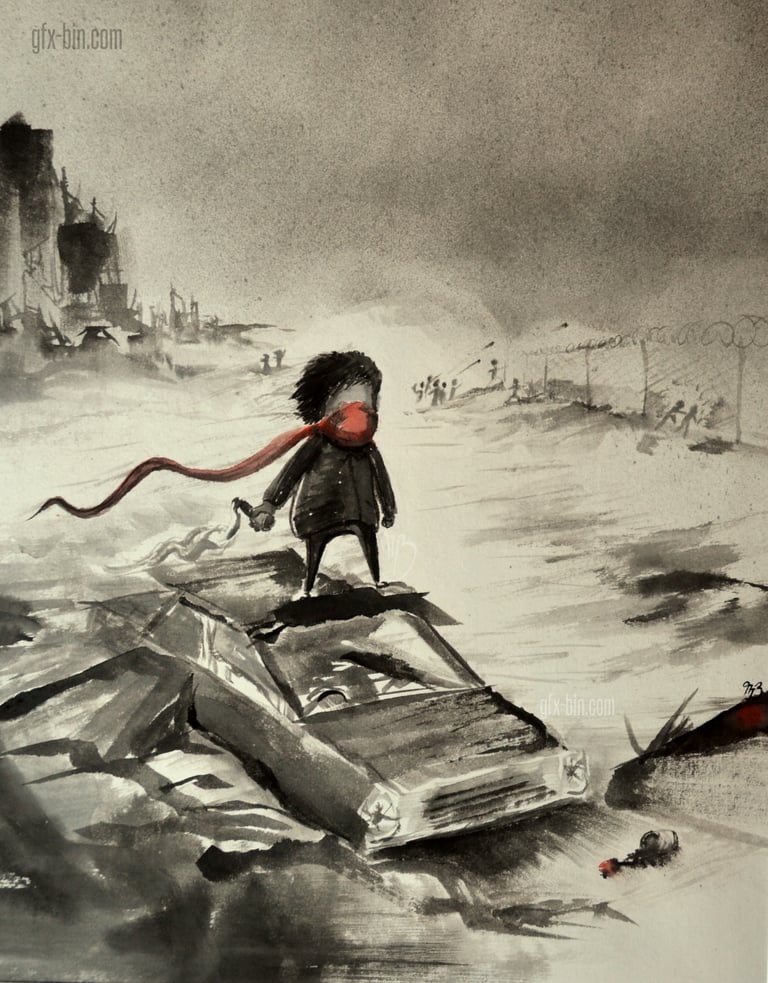
4 Fight
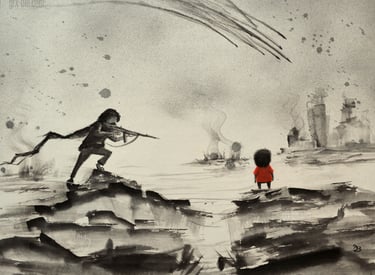
The child, now a teenager, stands poised like a fighter atop the wreckage of the old world. The once-bright scarf is now a smudged and darkened grey, tied as a mask of anonymity and war. They are now pledged to fight poison with poison.
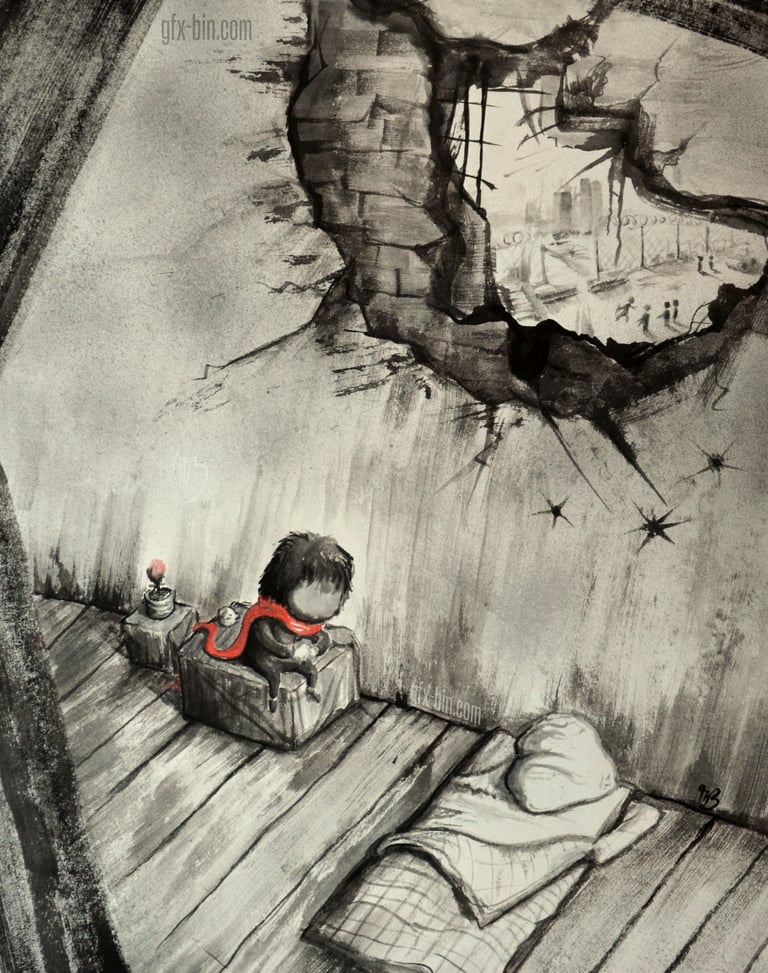
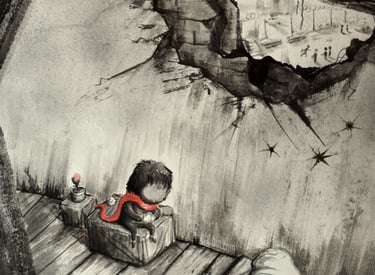
3 Void
In the stillness of a makeshift home, the child is left with their thoughts. The world outside the broken wall continues its turmoil, but inside, there is only a deep quiet. It's in this solitude that a slow, unseen change begins, a hardening, a withdrawal. The scarf has begun to lose its brilliant hue, muted by the dust of the ruins.
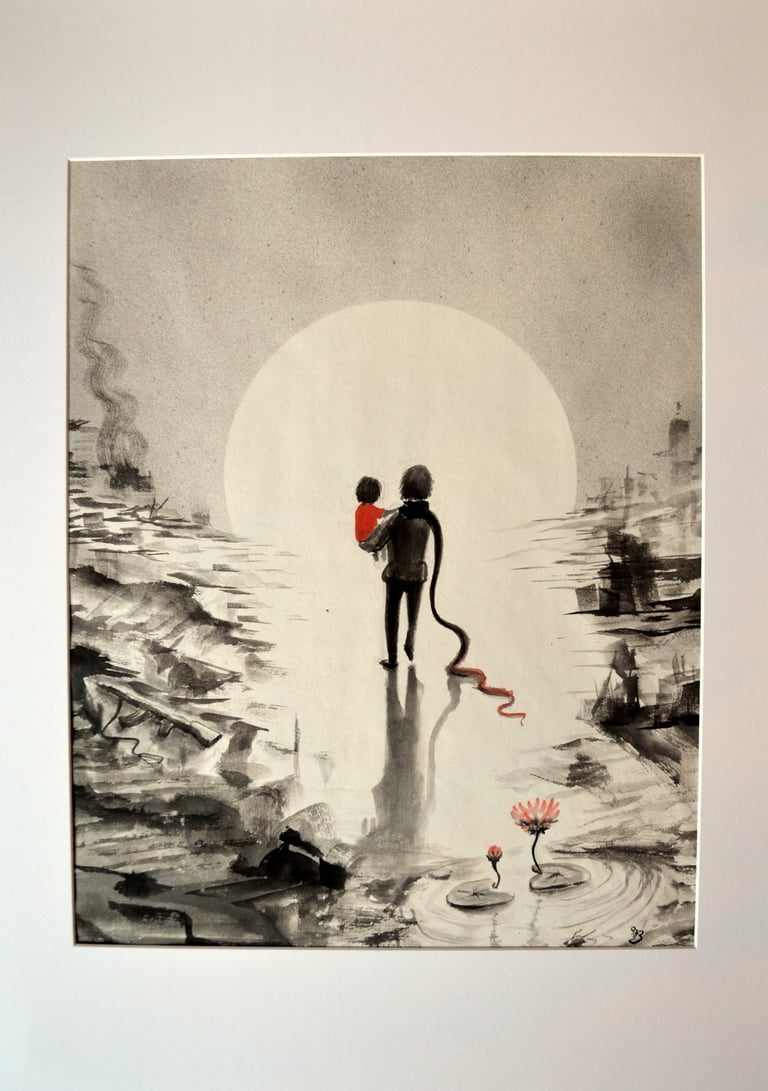
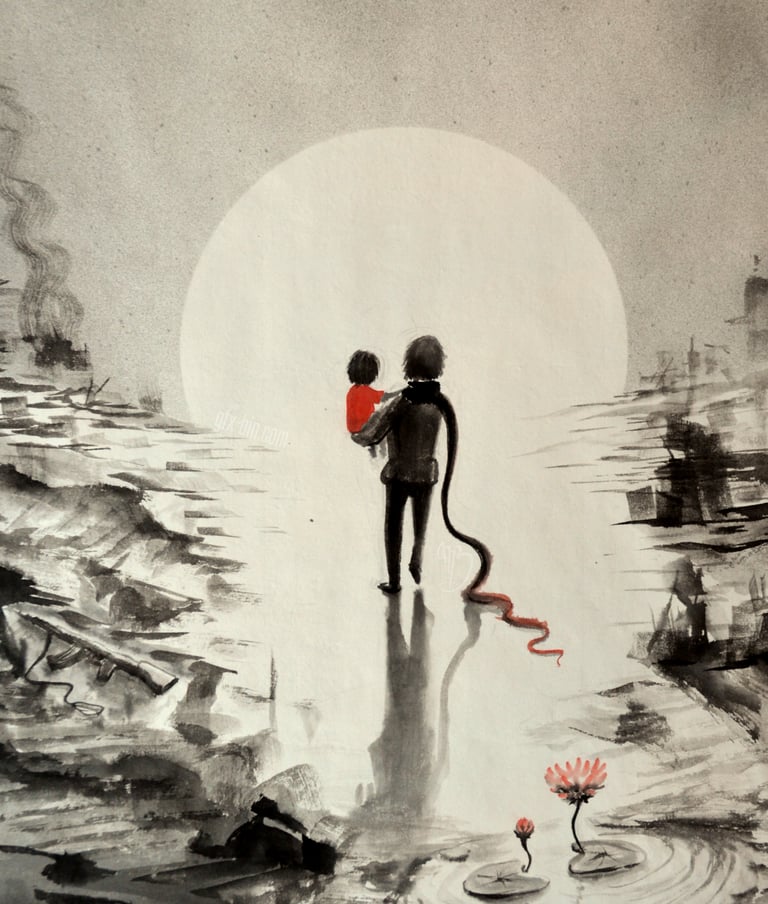
6 Hope
But here, the circle breaks. This is not an ending, but an alternative beginning. It is the conscious, courageous choice to unclench the fist and offer an open hand. It is the practical, profound work of planting a garden in the ruins, nurturing a new generation in the safety that was once denied.
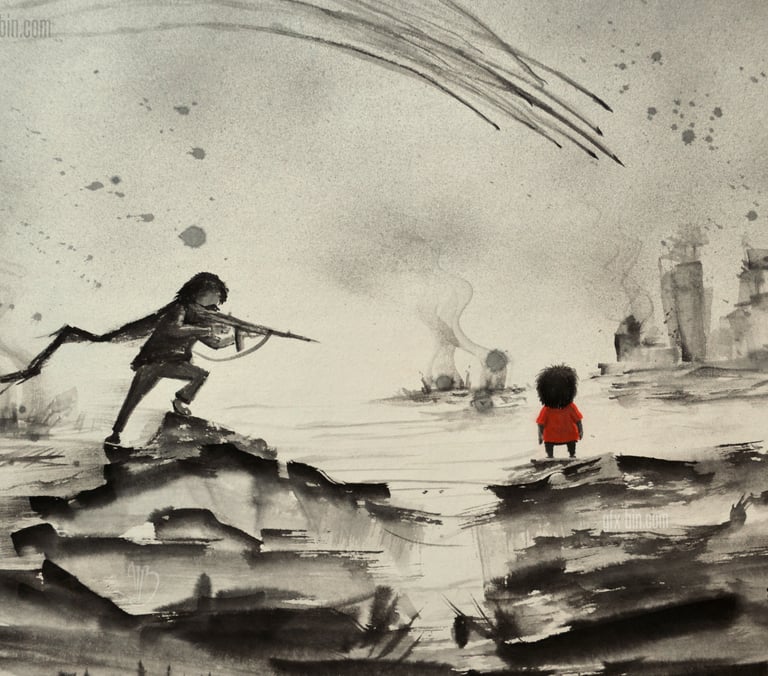
5 Lost
The cycle is complete. They now stand where the oppressor once stood, pointing the instrument of their own destruction at a new, innocent face. The scarf, once a symbol of vibrant life, is now a fully blackened and tattered shroud, the final proof that they are utterly lost to the cycle, having become the very thing that destroyed them.
The Cycle of Peace
Materials: Sumi Ink on Rice Paper
Debuted six new paintings, expanding the visual narrative of "The Cycle"
Event of Peace and Senior Wellness on March 18, 2026
Hotel de la Paix (Lugano, Switzerland)
The continued series depicts the transformative path to peacebuilding, moving from individual acts of care to the creation of a renewed society. It begins with the focused work of tending fragile new growth and making quiet repairs, showing that healing starts by addressing one’s basic needs. These small gestures gradually scale into collective actions, as a diverse community builds together, forging a shared identity and a visible network of mutual support. From this foundation a new and safer culture takes root, one where knowledge, joy, and intergenerational connection are nurtured. The final vision is one of full flourishing, where life thrives in a once-broken landscape. The recurring symbol of red evolves from a single, personal item into a part of the world itself—woven into gardens, art, and the community bonds – showing how hope, when carefully tended, can grow into a lasting legacy for the future.
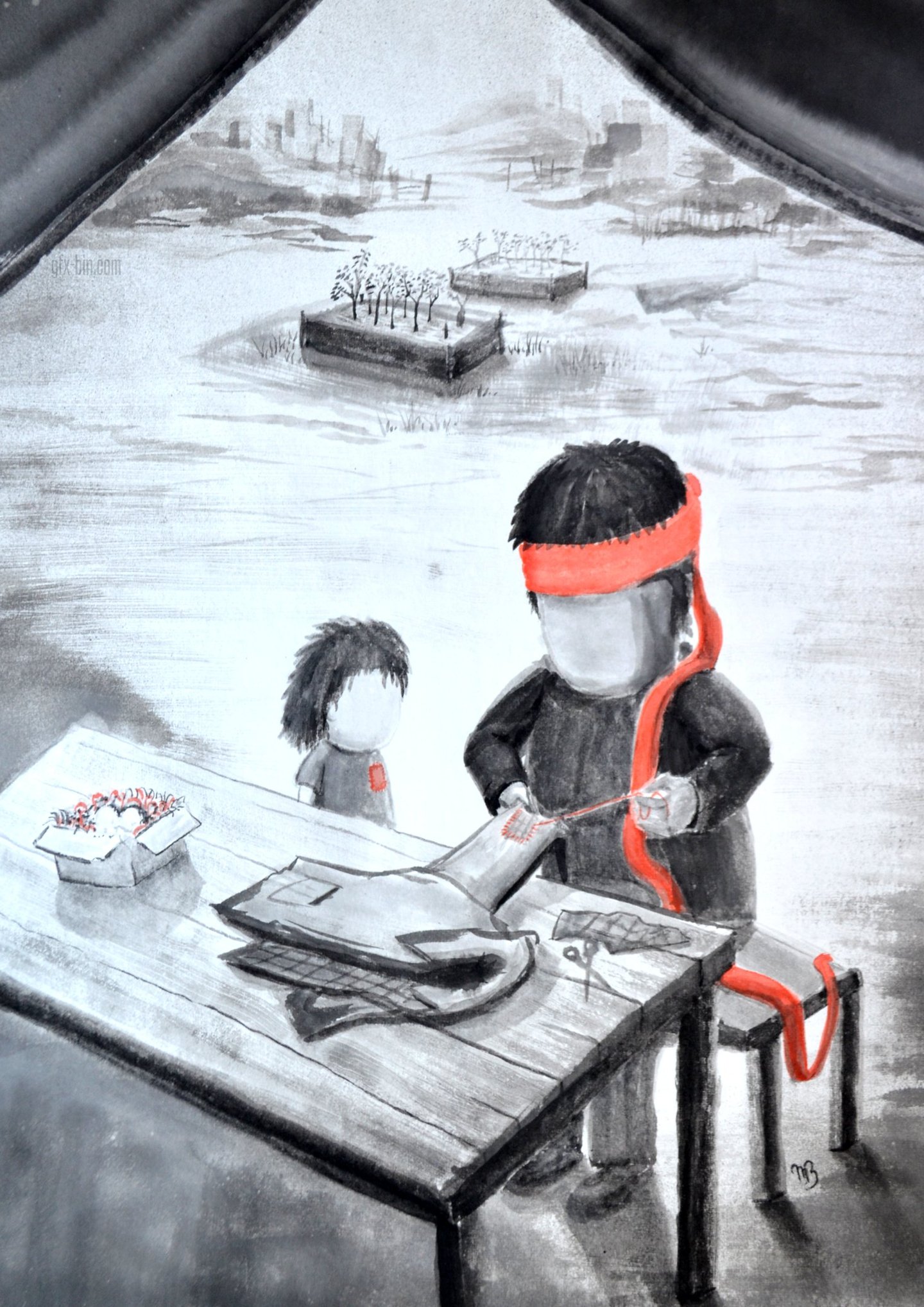
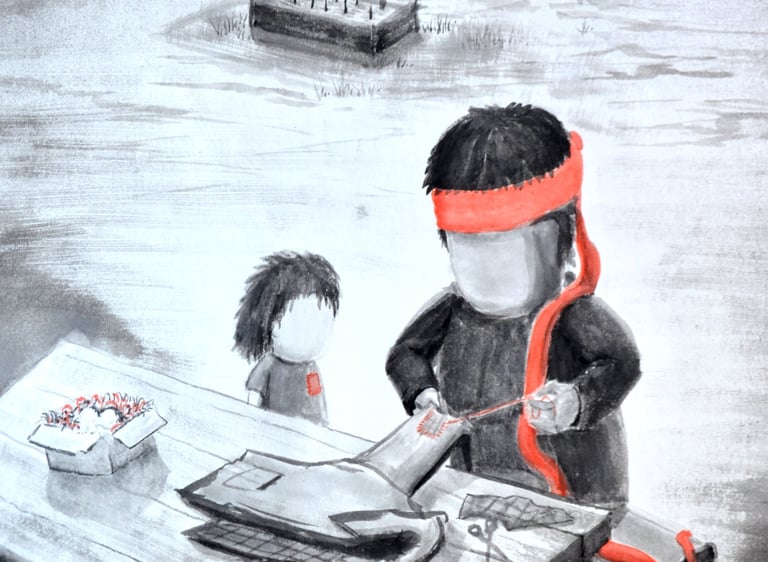
8 Connection
The peacebuilder in the red scarf sits with another, mending a torn jacket. Using red thread pulled from their own scarf, they stitch the fabric back together, while the other person watches. The act makes the connection tangible, showing that healing begins with meeting basic needs and offering care through action.
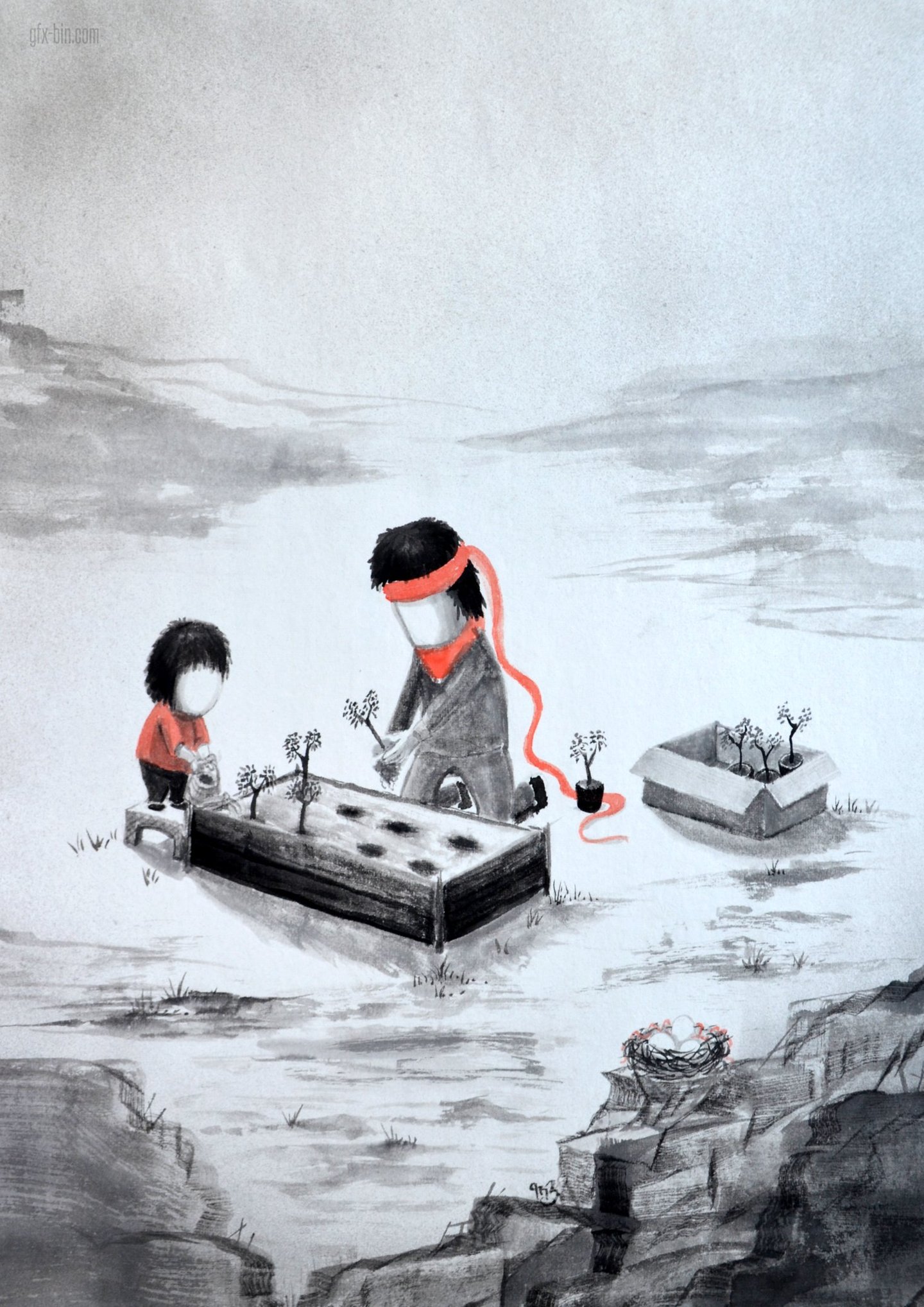
7 Cultivation
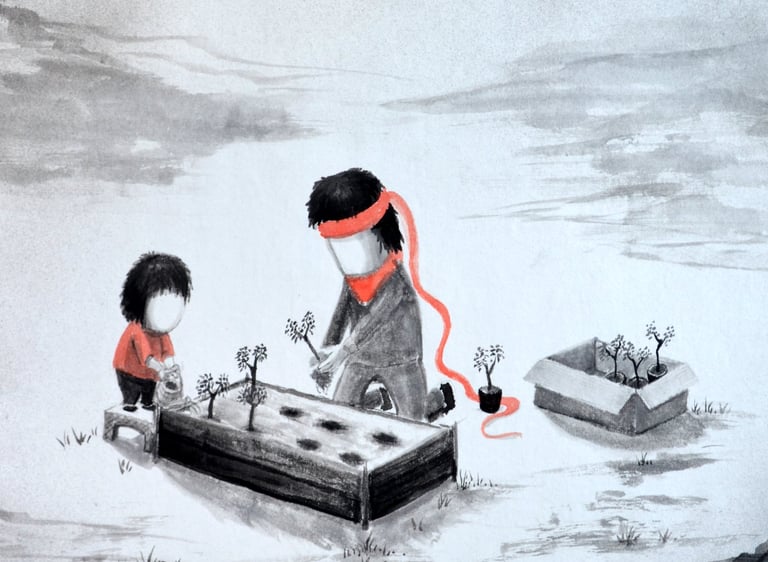
The figures from "Hope" are now shown cultivating the soil among the ruins. The red scarf, washed and vibrant, is tied around their head, a sign of the work needed to carry their message forward. The focus is on the practical labor of growth: watering, weeding and the protection required for fragile new life. Peace here is not a gesture, but a social practice.
10 Cooperation
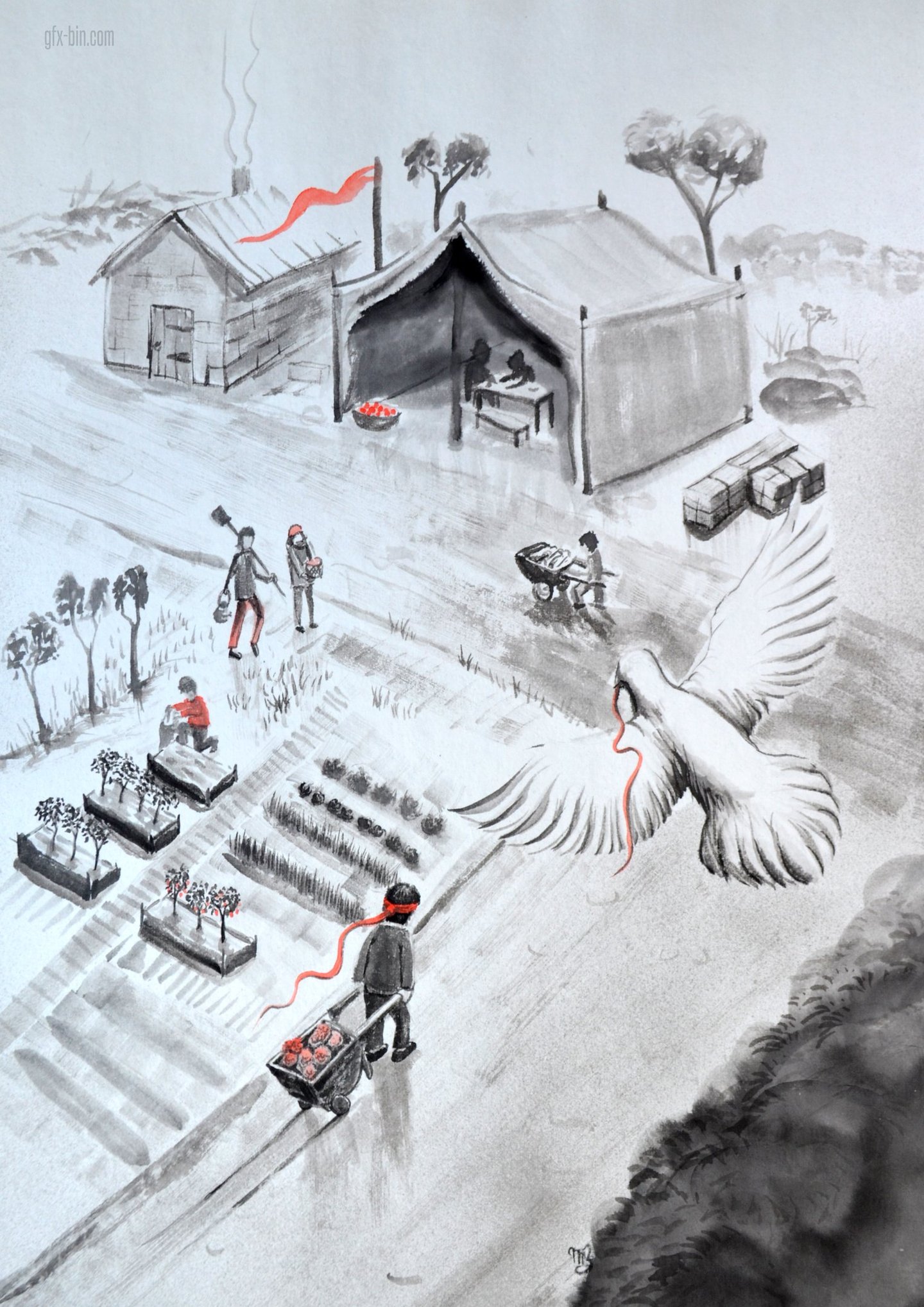
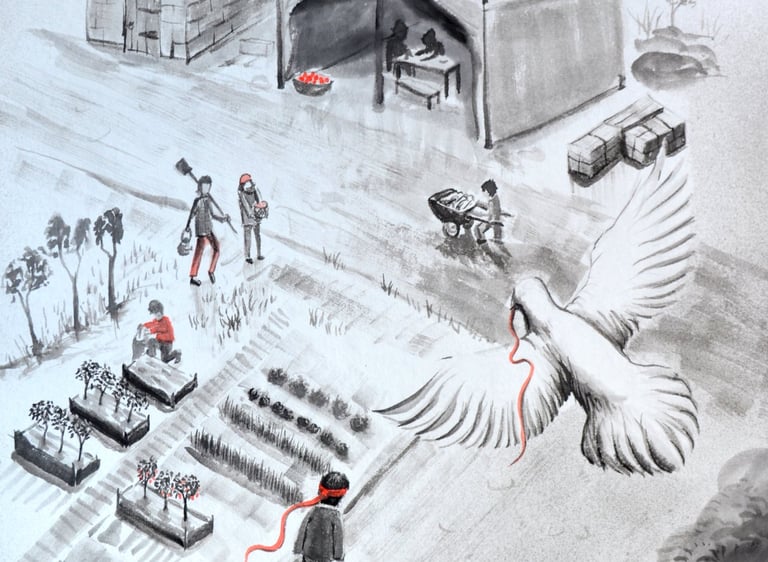
From above, we notice several changes: the garden is lush, the shelter is complete, and the paths have been cleared of ruins. Some people carry baskets of produce, others carry rolls of red cloth. Red runs throughout the image, connecting the community. This is the evolution of peace: from a place of hope, a living, mutually supportive ecosystem is born.
9 Ambassadors
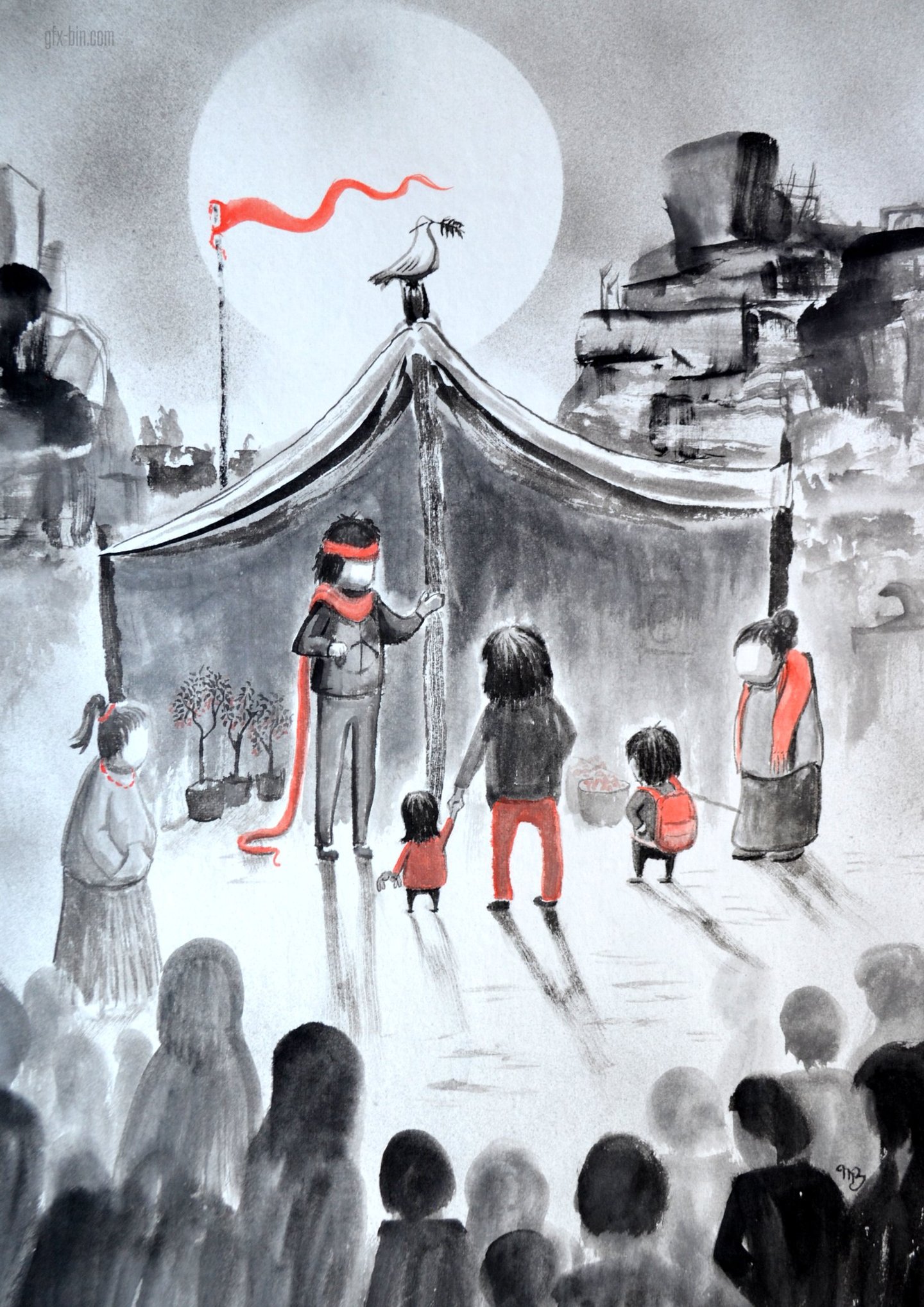
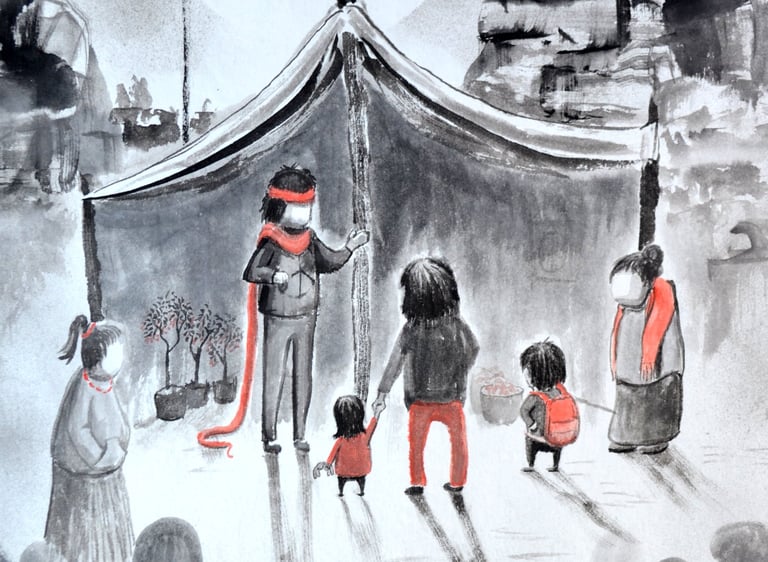
A diverse group gathers in a cleared space among the ruins, constructing a simple, open shelter together. Each person wears or carries a different item in red: a headband, a shirt, a pouch, a hat. The peacebuilder addresses the group, embodying the cooperation and a shared effort. A banner, echoing the peacebuilder’s scarf, flutters in the background. This is the birth of the "Ambassadors of Peace": a diverse community united not by trauma, but by shared purpose.
12 Peace
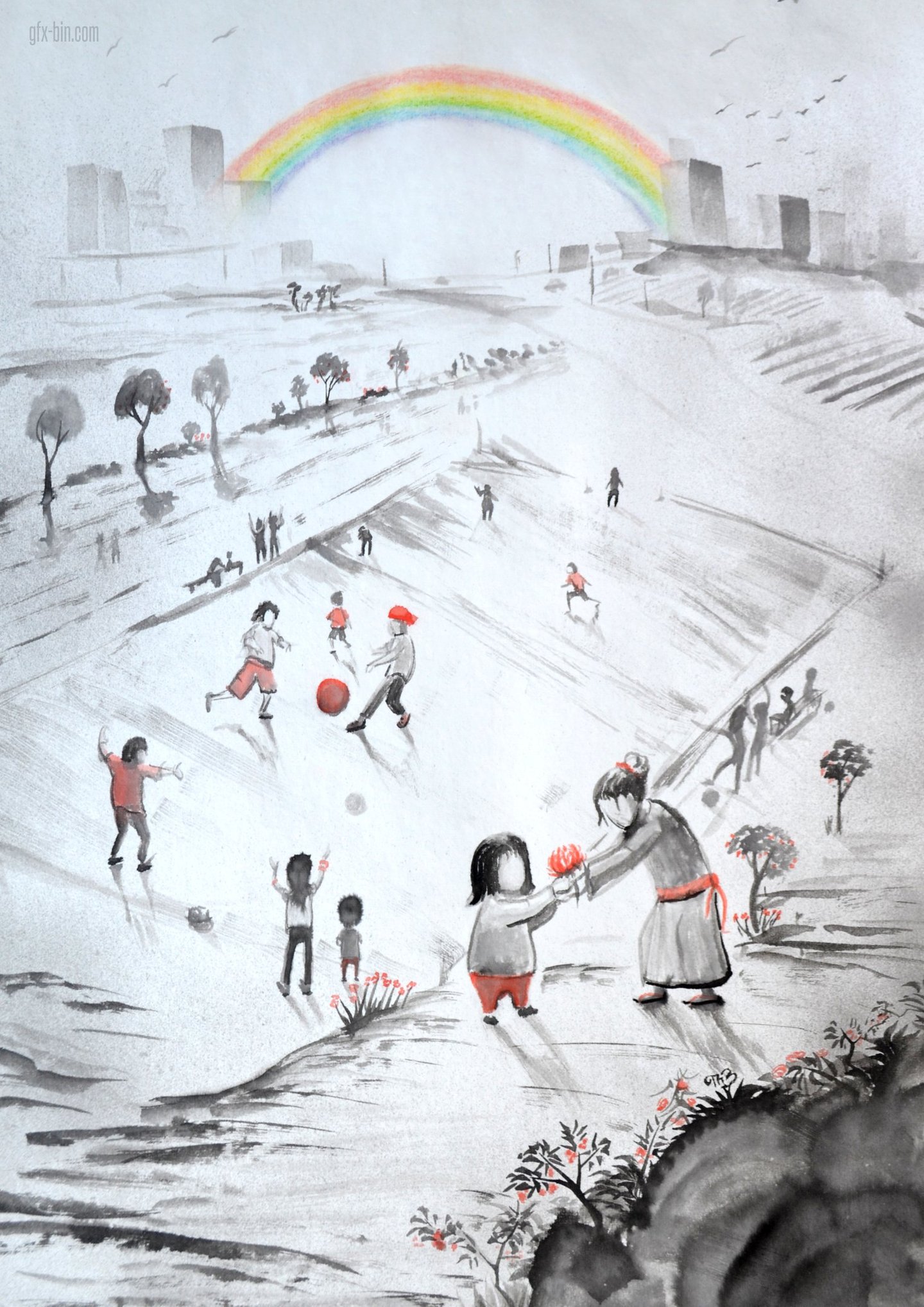
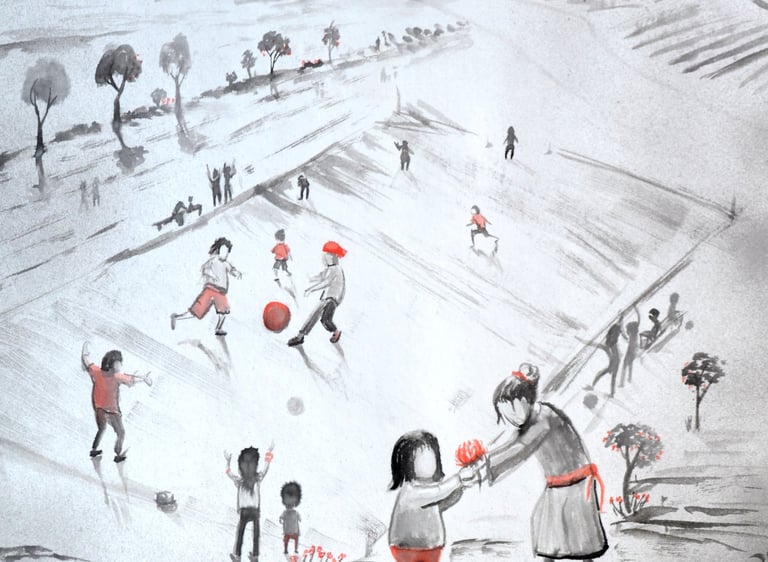
This final image is a mirror and inversion of painting number 1, "Play". In a once-desolate field, life now thrives: the plants are lush and children play with a ball patched with red cloth, watched by a multicultural group of adults. In the foreground, a lady offers a child a lotus flower with delicate red petals. The color red is no longer found only in a solitary scarf: it lives in the flowers, in the ball, in the clothes, integrating into a flourishing world. This is the future blossoming, where trauma gives way to a compassionate humanity.
11 Oasis
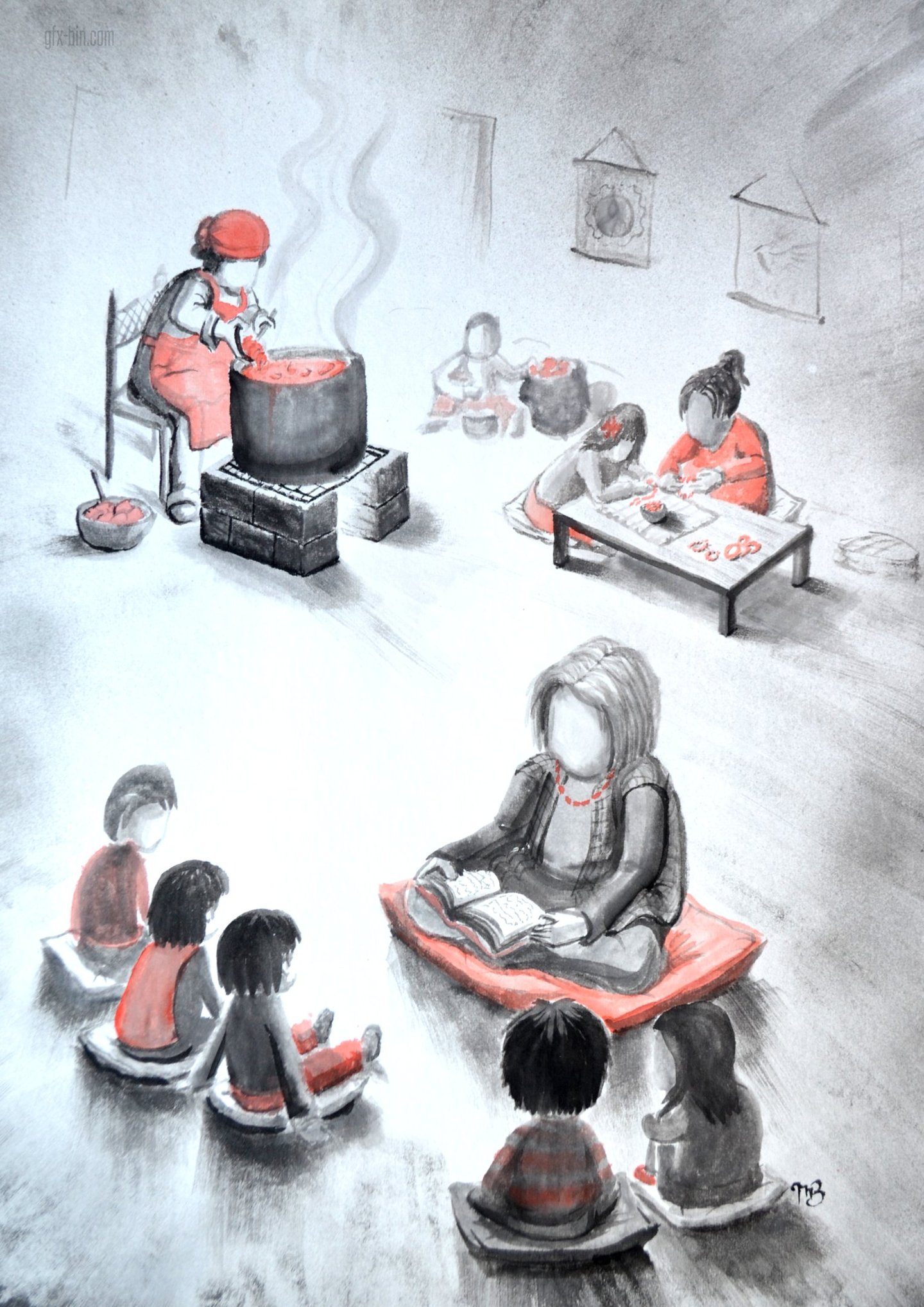
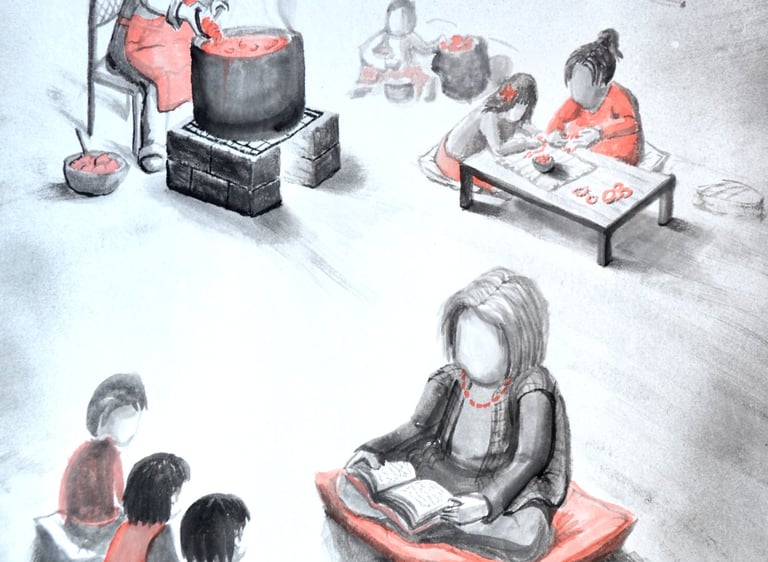
A multigenerational scene unfolds in the new shelter: elders teach children with recovered books, while a communal meal, made with tomatoes and red peppers from the garden, slowly simmers. A teenager weaves red bracelets, and the walls are decorated with artwork. The emptiness of the past gives way to the serene buzz of community. This is the building of a peaceful and safe culture, where knowledge, joy, and humanity are carefully cultivated.